|
Thanks to Paul Stephenson for lending a copy of Observers Wild Flowers by Francis Rose. First published in 1937,
third edition, completely revised and illustrated 1978, reprinted 1992, Bloomsbury Books. ISBN 1-8547-1083-4.
Also refer:
|
|
Image |
Description |
|
Thanks to Scott, Paul, Barbara, Mark and Hywel (Darebsury) and
Nancy K. Fasoldt from Syracuse, New York State for help in identifying flowers. Also to Paul
Stephenson for lending a copy of "Observers Wilde Flowers" (by Francis Rose)
|
|
|
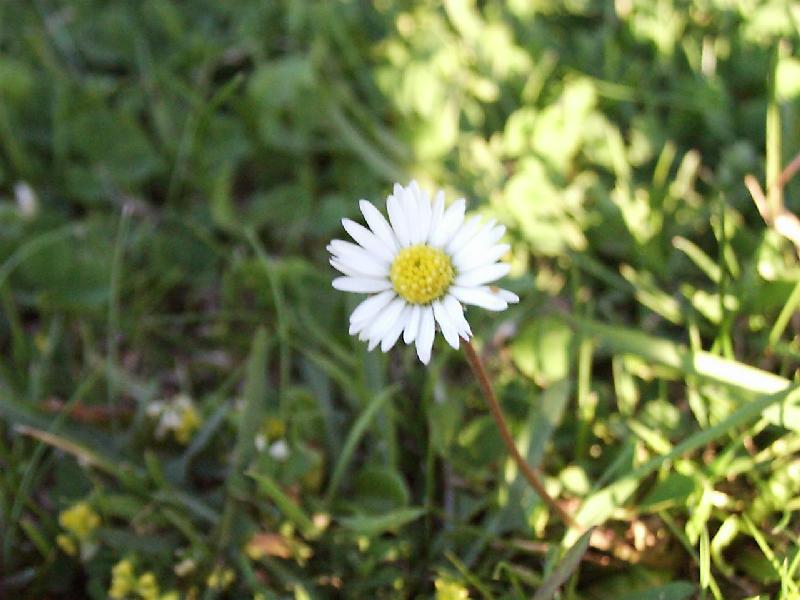
0. Scentless Mayweed (Matricaria perforata) Mayweed Chamomile or Corn Chamomile (From Nancy K. Fasoldt, Syracuse, New York State (16th May 2000): "BTW, our garden columnist says the image you have is not Daisy - Bellis perennis. Rather, it is either mayweed chamomile or corn chamomile depending on whether the crushed foliage smells bad. Mayweed also known as "stinking daisy" and "fetid chamomile.") |
|
|
1. Scentless Mayweed (Matricaria perforata) or Sea Aster (Aster tripolium) (was labled as a Daisy - Bellis perennis - (Compositae)) |
|
2. Buttercup - Ranunculus sp. (Ranunculaceae). Looks like "Ranunculus acris" |
|
3. Selfheal (Prunella vulgaris) |
|
5. Honeysuckle - Lonicera periclymenum - (Caprifoliaceae) |
|
6. Common Bird's-foot-trefoil (Lotus corniculatus) or Meadow Vetchling (Lathyrus pratensis) |
|
7a. Creeping Thistle (Cirsium arvense) |
|
8. Blackberry/Bramble (Rubus fructicosus) |
|
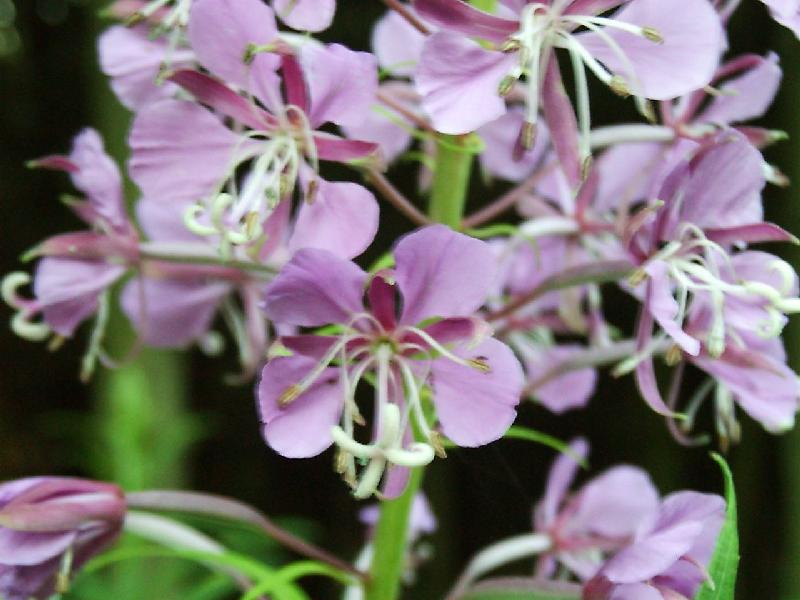
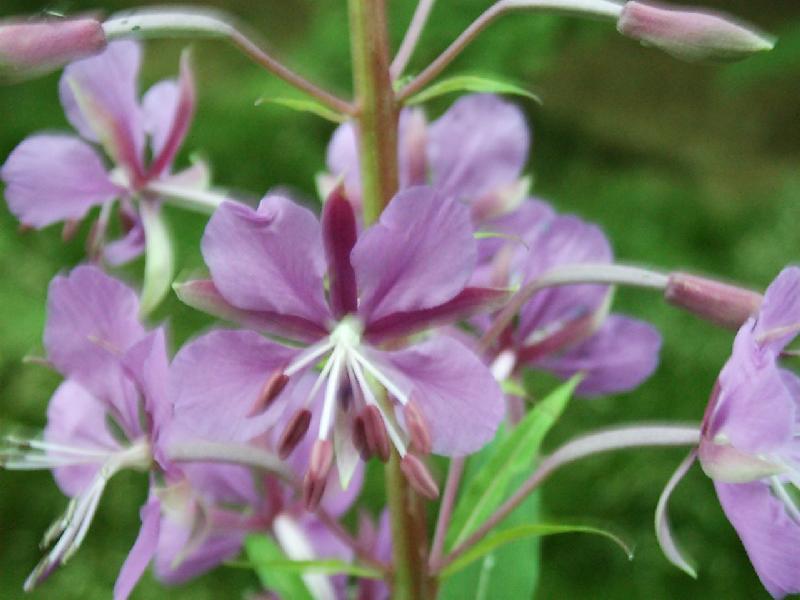
10. Rosebay willowherb (Epilobium angustifolium) |
|
22. Meadas Cranesbill (?) or Wood Cranesbill (?) |
|
11. Common Ragwort (Senecio jacobaea) |
|
15. Digitalis Purpurea (ordinary wild foxglove)
"Forgot to say too - 15 is more accurately Digitalis Purpurea, i.e. ordinary
wild foxglove. You can tell it's wild because the flowers are only on one
side of the stalk. Cultivated varieties come in yellow, white and pink (that
I've seen).
|
|
16. Red Clover (trefolium pratense) "Try not to trample 16 (the red clover). We need this plant to stop bumble bees from becoming extinct in the UK - no, really, it's true!" |
|
17. Red Campion (sileme dioica) |
|
18. White Clover (trefolium repens) |
|
19. Field Bindweed (Convolvulus arvensis) |
|
20. Policeman's Helmet/Himalayan Balsam (Impatiens glandulifera) |
|
21. Hogweed or Cow Parsnip (Heracleum sphondylium) - with Bee at Work |
|
23. Dandelion (Taraxacum officinale) or Cat's-Ear (Hypochoeris radicata) |
|
24. Tufted Vetch (Vicia cracca) (Fabaceae) |
|
25. Ribwort Plantain (Plantago laceolata) |
|
26. Dandelion Seedhead |
|
27. Blue and Yellow flower under one of the pines The implication from this assignment is that someone is going around the Daresbury Firs with a can of blue spray paint(?) |
|
28. Oxeye Daisy (Leucanthemum vulgare) |
|
29. Possible Evening Primrose |
|
30. White Mignonette (Reseda ?alba) (Resedaceae) |
|
31. Honeysuckle |
|
Back amongst the Daresbury Firs looking Towards the Daresbury Laboratory NSF Tower. |
|
1915 (Robert Graves)
"I'VE watched the Seasons passing slow, so slow,
Dear, you've been everything that I most lack
The Authors' Licensing and Collecting Society: http://www.alcs.co.uk) |
This England "This royal throne of kings, this sceptred isle, This earth of majesty, this seat of Mars, This other Eden, demi-paradise, This fortress built by Nature for herself Against infection and the hand of war, This happy breed of men, this little world, This precious stone set in the silver sea... This blessed plot, this earth, this realm, this England." William Shakespeare, 1564-1616, Richard II, Act 2, Scene 1 (JOHN OF GAUNT (Duke of Lancaster) speaks) |